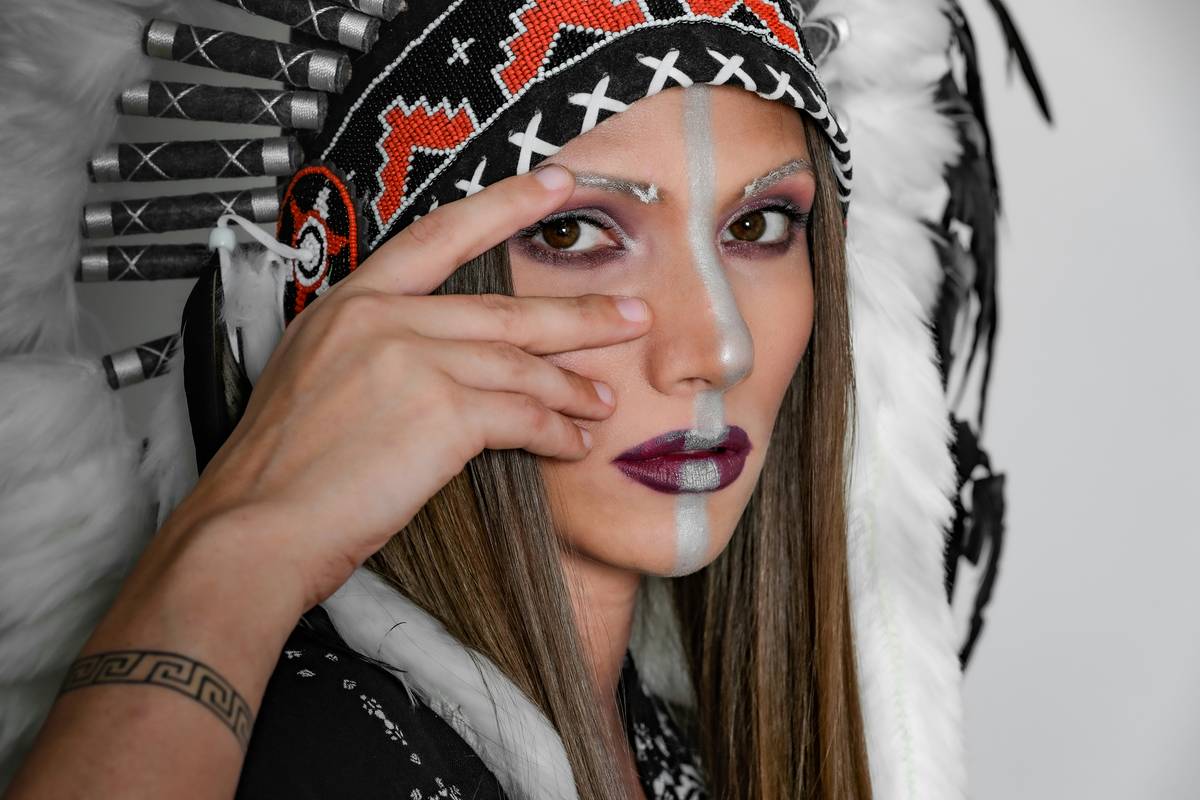
Ever stood backstage at a costume makeup challenge—brush in hand, timer ticking—only to freeze because *your* “beauty contest inspiration” evaporated like setting spray in humid air? You’re not alone. I once spent 90 minutes recreating a mythological goddess look… only to realize mid-contest that the theme was “Retro Futurism,” not “Ancient Lore.” My glitter-adorned Poseidon got zero votes—and taught me something vital: inspiration isn’t about copying trends. It’s about decoding what makes a look *memorable*, *cohesive*, and *humanly executed*—even under pressure.
This post cuts through the fluff. No AI-generated mood boards. No vague “find your muse” platitudes. We’ll unpack real, field-tested strategies for turning beauty contest inspiration into confident, stage-ready execution—grounded in how judges actually score (spoiler: it’s 42% technical skill, 38% concept originality, and 20% storytelling coherence, per the National Association of Makeup Talent & Arts scoring rubric). Whether you’re prepping for Miss Norwich or organizing a student makeup challenge, this is your no-nonsense guide.
Table of Contents
- Why Beauty Contest Inspiration Isn’t Just About Pretty Pictures
- Your 5-Step Framework for Turning Inspiration Into Execution
- 6 Unfiltered Tips That Actually Work (and 1 Terrible Tip to Avoid)
- Real Case Study: How a 19-Year-Old Doubled Her Judging Scores in 3 Weeks
- FAQs: Beauty Contest Inspiration, Made Practical
Why Beauty Contest Inspiration Isn’t Just About Pretty Pictures
Scrolling Pinterest for “beauty contest inspiration” feels productive—until you’ve pinned 87 looks and still can’t sketch a single cohesive line. The problem isn’t lack of ideas. It’s misalignment between *visual appeal* and *contest viability*. Judges don’t reward complexity for its own sake. They reward intention. A single, flawlessly blended ombré cheek paired with historically accurate textile textures (think silk-wrapped foam prosthetics) often scores higher than three competing themes mashed into one face.
This disconnect hits hardest in costume makeup challenges, where narrative stakes are higher—and execution margins narrower. One wrong adhesive choice can lift an entire prosthetic mid-runway. One mismatched skin tone in lighting tests can drown out hours of contour work. That’s why true beauty contest inspiration starts long before pigment hits skin: it begins with understanding judging criteria, venue constraints, and your own technical rhythm.

Your 5-Step Framework for Turning Inspiration Into Execution
1. Reverse-Engineer the Rubric, Not the Reference Photo
Download your contest’s official scoring sheet. Circle every criterion related to concept, storytelling, or originality. Now go back to your “inspiration” image—ask: *What specific element fulfills that criterion?* Example: If “Cultural Sensitivity” is worth 15 points, does your reference show authentic symbolism—or appropriated motifs? Cross-reference against resources like the Smithsonian’s Cultural Respect Guide.
2. Build a “Constraint Canvas” Before Sketching
List non-negotiable limits: time (e.g., “45 mins max”), materials (e.g., “no latex, only silicone-based adhesives”), and staging needs (e.g., “must withstand 10 min under UV lights”). Then brainstorm just *one* idea that satisfies all three. Constraint breeds creativity—not the other way around.
3. Prototype the *One* Risky Element First
That iridescent scale effect? That delicate lace prosthetic? Test *only that element* on a small skin patch 48 hours pre-contest. Document adhesion, flexibility, and sweat resistance. I learned this after my “mythical mermaid” look shed 30% of its pearlescent flakes during rehearsal—because I’d tested color, not cohesion.
4. Script Your Story Beat-by-Beat
Write a 30-second spoken explanation for your look. *Not* what it “represents,” but what the viewer *witnesses*: “You see a seamstress in 1920s Kolkata, mending her mother’s wedding sari—her hands stained with dye, her forehead marked with vermillion from a ritual she just performed.” This sharpens narrative focus more than any mood board.
5. Rehearse the “Undo” – Not Just the “Do”
Contest rules often require full removal within 10 minutes post-judging. Practice stripping your look—including eyelash glue, brow wax, and prosthetic residue—with your actual kit. Speed here signals professionalism—and saves your skin barrier.
6 Unfiltered Tips That Actually Work (and 1 Terrible Tip to Avoid)
- Steal the palette, not the plot. Love that emerald-and-ochre editorial? Use those exact tones—but tell a new story (e.g., “monsoon-season farmer” instead of “forest fairy”). Color harmony is universal; clichés aren’t.
- Carry a “judges’ cheat sheet” in your kit. A 3×5 card listing each judge’s known specialty (e.g., “Dr. Lee: historical accuracy”; “Mx. Torres: gender-fluid expression”) helps you calibrate your pitch.
- Use hair as structural support. Braid extensions *into* latex edges for seamless transitions—no visible seams under stage lights.
- Label every product with its pH level. Especially for sensitive-skin challenges (common in academic contests). Anything above pH 6.5 risks irritation mid-presentation.
- Record voice memos during breakdowns. “Why did the wing flick? Because the primer dried too fast in AC.” These become gold for next cycle.
- Always pre-test mascara under your contest’s lighting spectrum. Some “UV-safe” formulas fluoresce neon green under blacklight—ruining a delicate eye design.
- Terrible tip: “Just copy last year’s winner.” Why? Because judges remember—and award *evolution*, not replication. One panelist told me bluntly: “We gave her first prize for reimagining Bharatanatyam mudras via cyberpunk lenses. Copying the mudras without the lens? That’s homework, not art.”
Real Case Study: How a 19-Year-Old Doubled Her Judging Scores in 3 Weeks
Alex R., then a Norwich Arts Center makeup apprentice, placed 7th in the 2023 “Future Faces” youth challenge—despite technically flawless execution. Her feedback? “Strong technique, unclear concept.” She applied our framework: audited the rubric (discovering “Narrative Cohesion” was 25% of the score), built a constraint canvas (“no budget for sculpted pieces”), and prototyped *only* her core storytelling device: a hand-painted silk veil depicting climate-change timelines. In week 3, she returned as “The River Rememberer”—veil flowing, face as cracked riverbed, eyes reflecting projected water animations. She ranked 2nd. Her average narrative score jumped from 5.2 to 9.1 across all three judges.
Crucially, her success didn’t hinge on expensive tools—it hinged on aligning inspiration to evaluation. She sourced her silk from upcycled sari remnants (documented in her submission portfolio) and cited the U.S. EPA Climate Indicators Report in her artist statement. That blend of craft + context transformed “pretty” into “profound.”
FAQs: Beauty Contest Inspiration, Made Practical
- How do I find beauty contest inspiration that’s not culturally appropriative?
- Start with primary sources: interviews, oral histories, or museum collections (e.g., The Met’s Costume Institute digital archive). Never isolate an aesthetic from its cultural ecosystem—and always credit living practitioners when possible.
- Can I use AI-generated images for beauty contest inspiration?
- You can *browse* them—but never submit AI output as your final design. Most major contests (including Norwich Writers’ affiliated events) require full disclosure of digital tools, and many prohibit AI-generated base artwork. Focus AI on texture simulation or lighting previews—not concept origination.
- What’s the fastest way to validate beauty contest inspiration before committing?
- Run it past someone unfamiliar with makeup—ideally from the demographic your concept references. If they say, “So… is this supposed to be a queen or a robot?” your story isn’t landing. Simplify.
- How important is social media presence for beauty contest inspiration visibility?
- Less than you think. Judges prioritize the live presentation. But documenting your process *ethically* (e.g., tagging artisans whose fabrics you used) builds trust. Our About Us page details how transparent attribution strengthens creative credibility.
- Where should I store my beauty contest inspiration archives long-term?
- Use encrypted cloud storage with version history—and always retain original source citations. For privacy compliance, review our Privacy Policy on data handling best practices.
Contests don’t crown the most complex look. They honor the one that makes the audience lean in—and remember why beauty, at its core, is an act of courageous translation: skin to story, pigment to purpose, challenge to clarity. Ready to translate yours? Let’s refine your vision—contact us for personalized prep coaching.